Nineteen ready to go, captions included.
The first eight carry the facts. The last ten carry the joy. Post them to your feed or story, or text one straight to the group chat. Sized 1080×1350, which works in both. Hit Caption to copy the words that go with the picture.
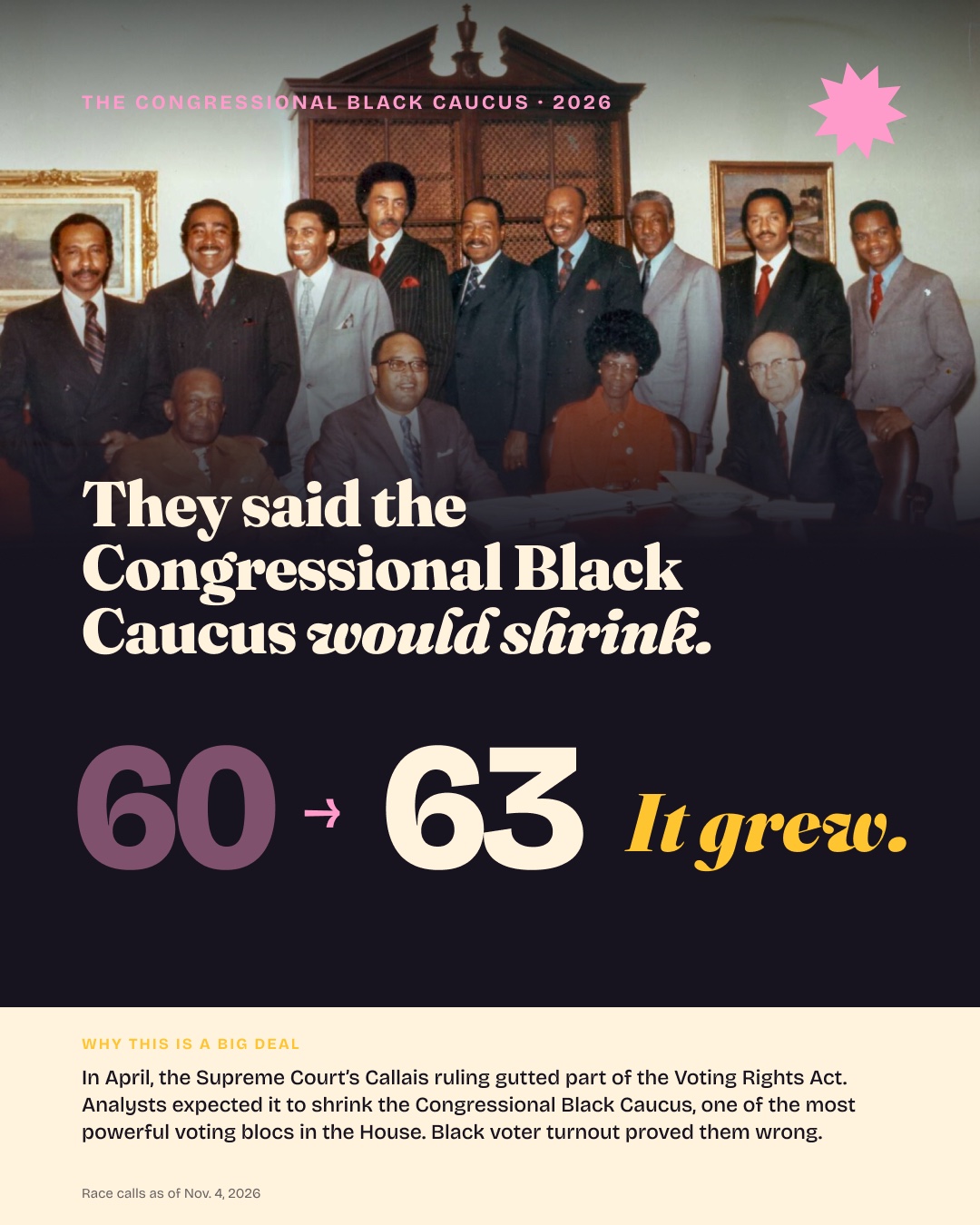
They said the Congressional Black Caucus would shrink. It grew, from 60 to 63. In April the Supreme Court gutted part of the Voting Rights Act, and Black voters answered at the ballot box.
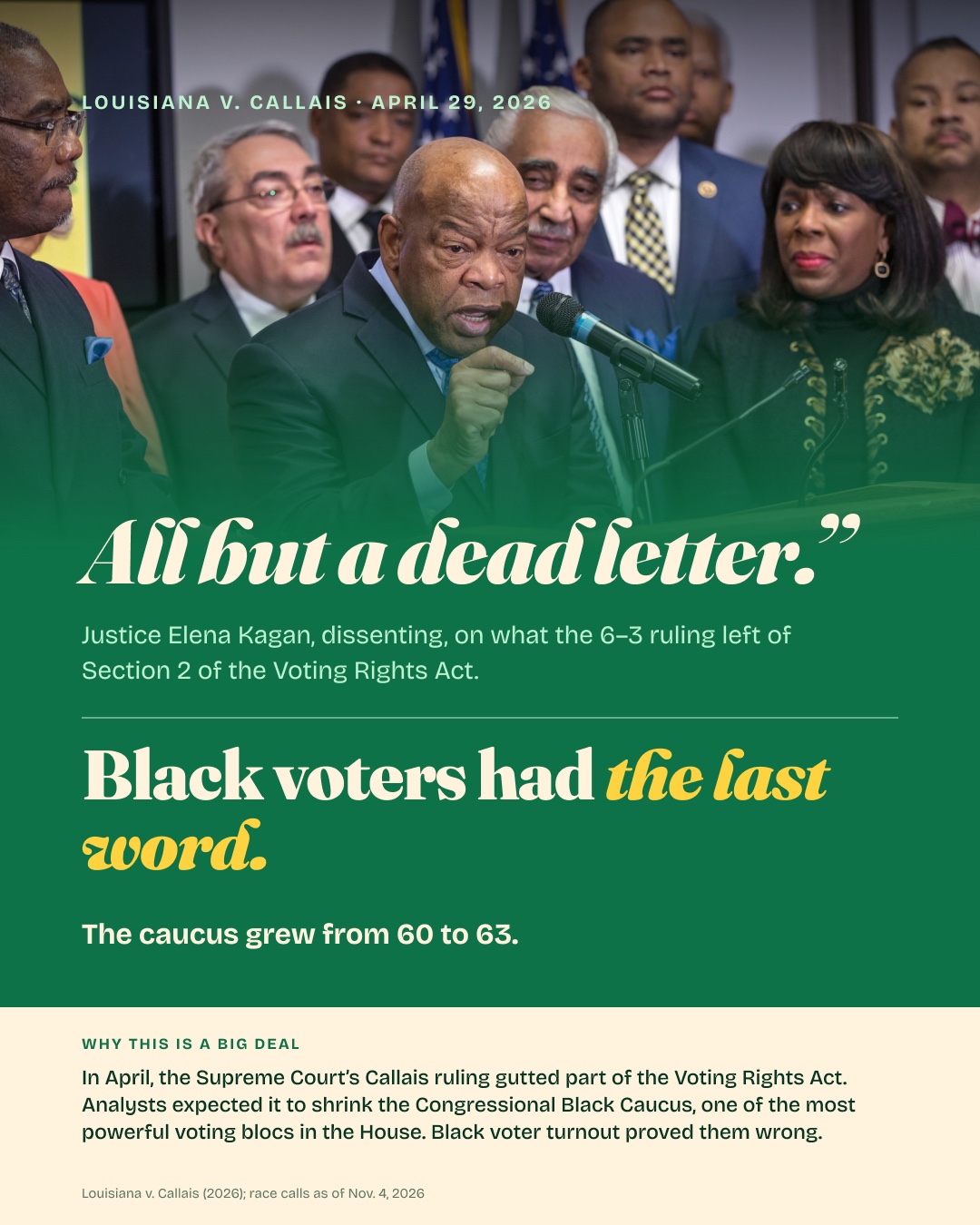
Dissenting in Louisiana v. Callais, Justice Elena Kagan said the 6–3 ruling left Section 2 of the Voting Rights Act “all but a dead letter.” Black voters had the last word. The Congressional Black Caucus grew from 60 to 63.
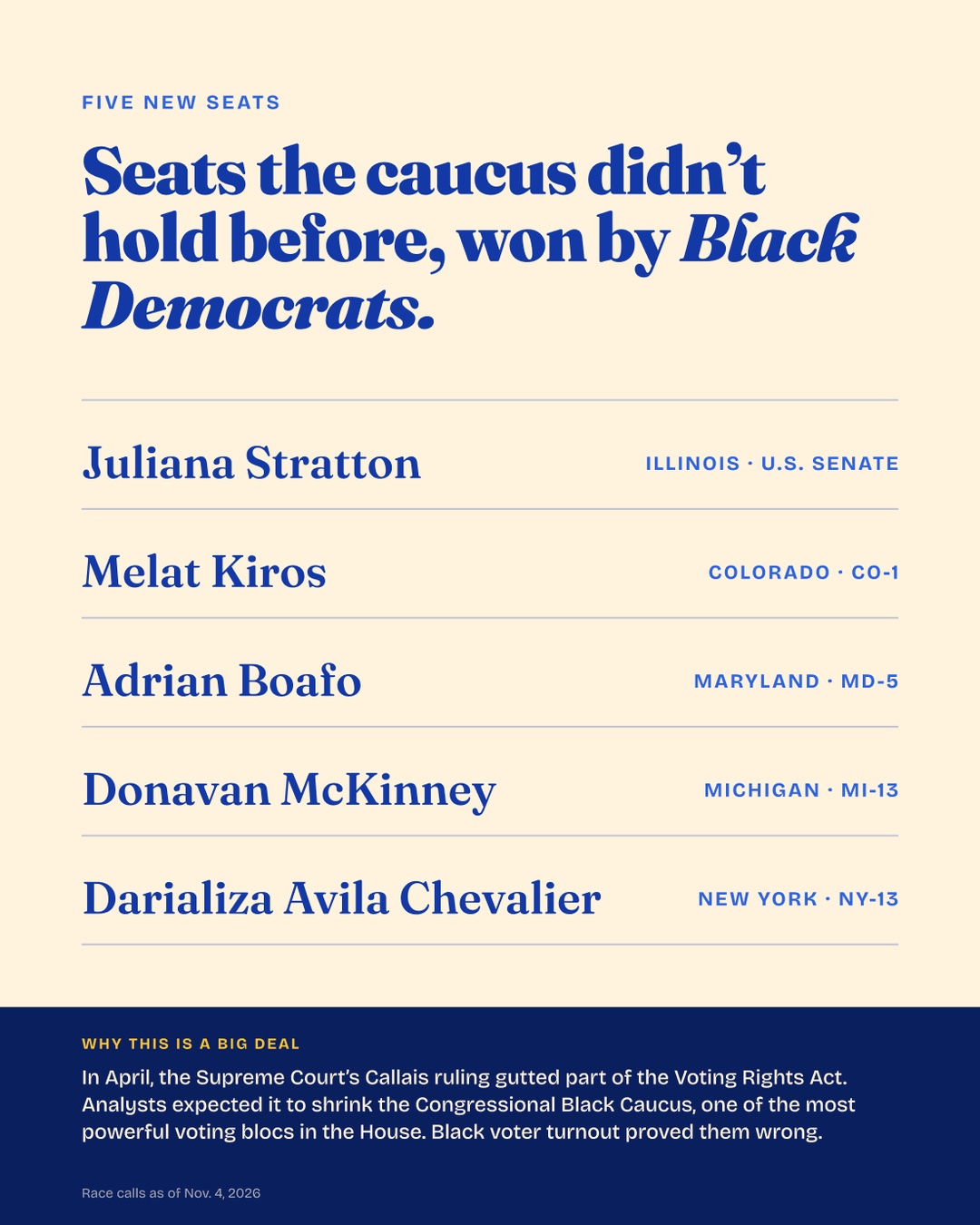
Five seats the Congressional Black Caucus didn’t hold before, won by Black Democrats: Juliana Stratton (Illinois, U.S. Senate), Melat Kiros (CO-1), Adrian Boafo (MD-5), Donavan McKinney (MI-13) and Darializa Avila Chevalier (NY-13).
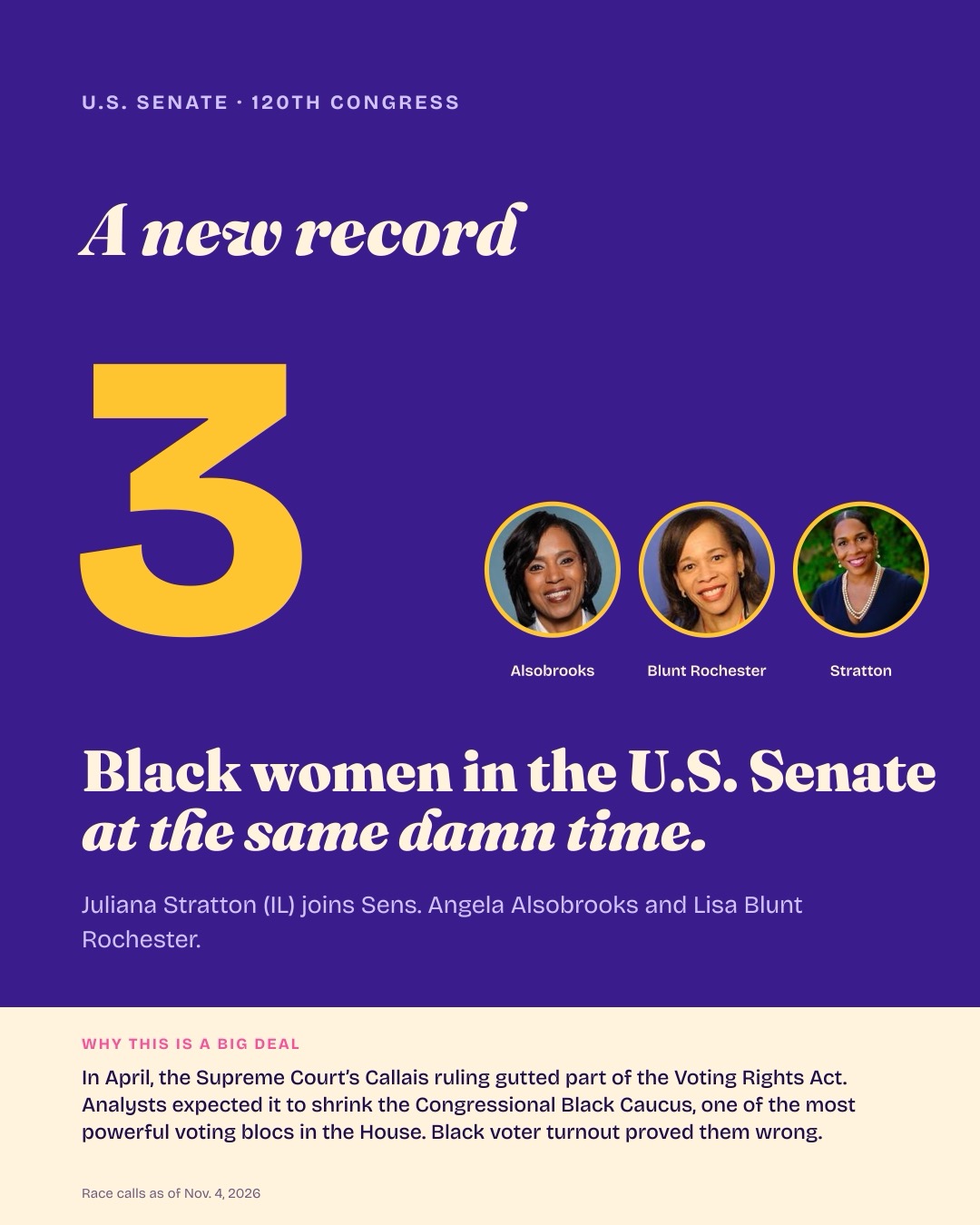
A new record: three Black women in the U.S. Senate at the same time. Juliana Stratton of Illinois joins Sens. Angela Alsobrooks and Lisa Blunt Rochester.
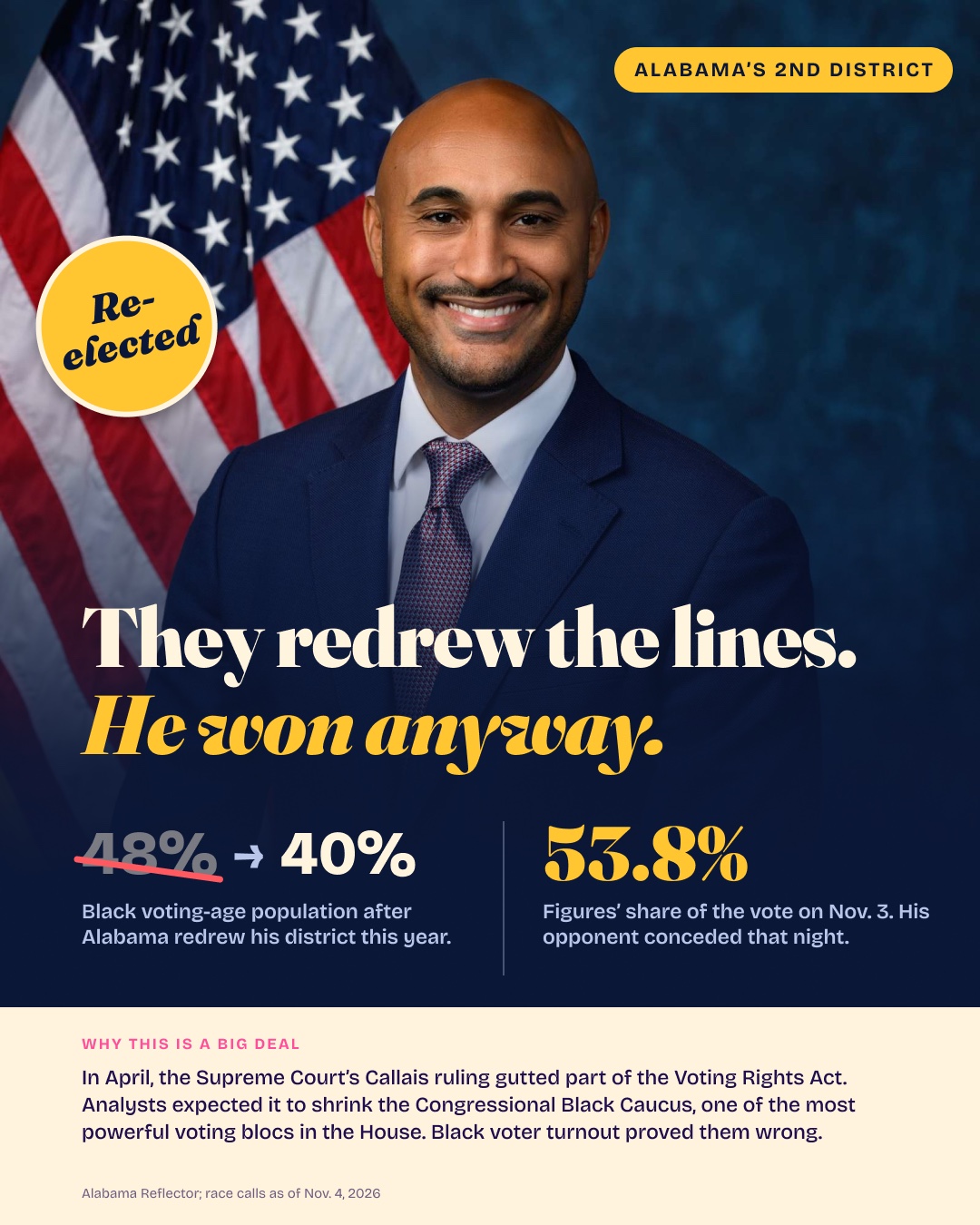
Re-elected. Alabama redrew Rep. Shomari Figures’ district and cut its Black voting-age population from 48% to 40%. He won anyway, with 53.8% of the vote.
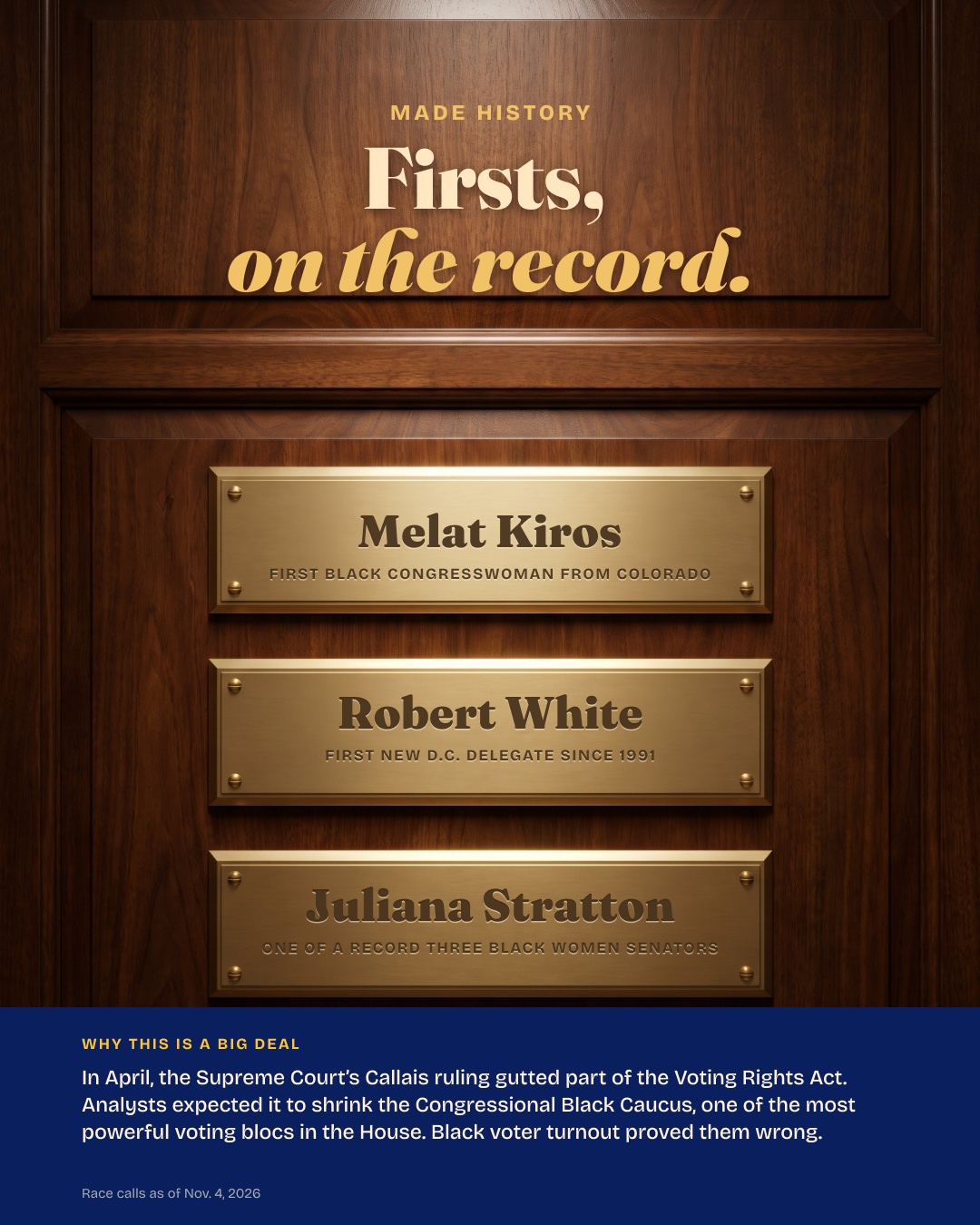
Firsts, on the record. Melat Kiros: the first Black congresswoman from Colorado. Robert White: the first new D.C. delegate since 1991. Juliana Stratton: one of a record three Black women in the Senate.
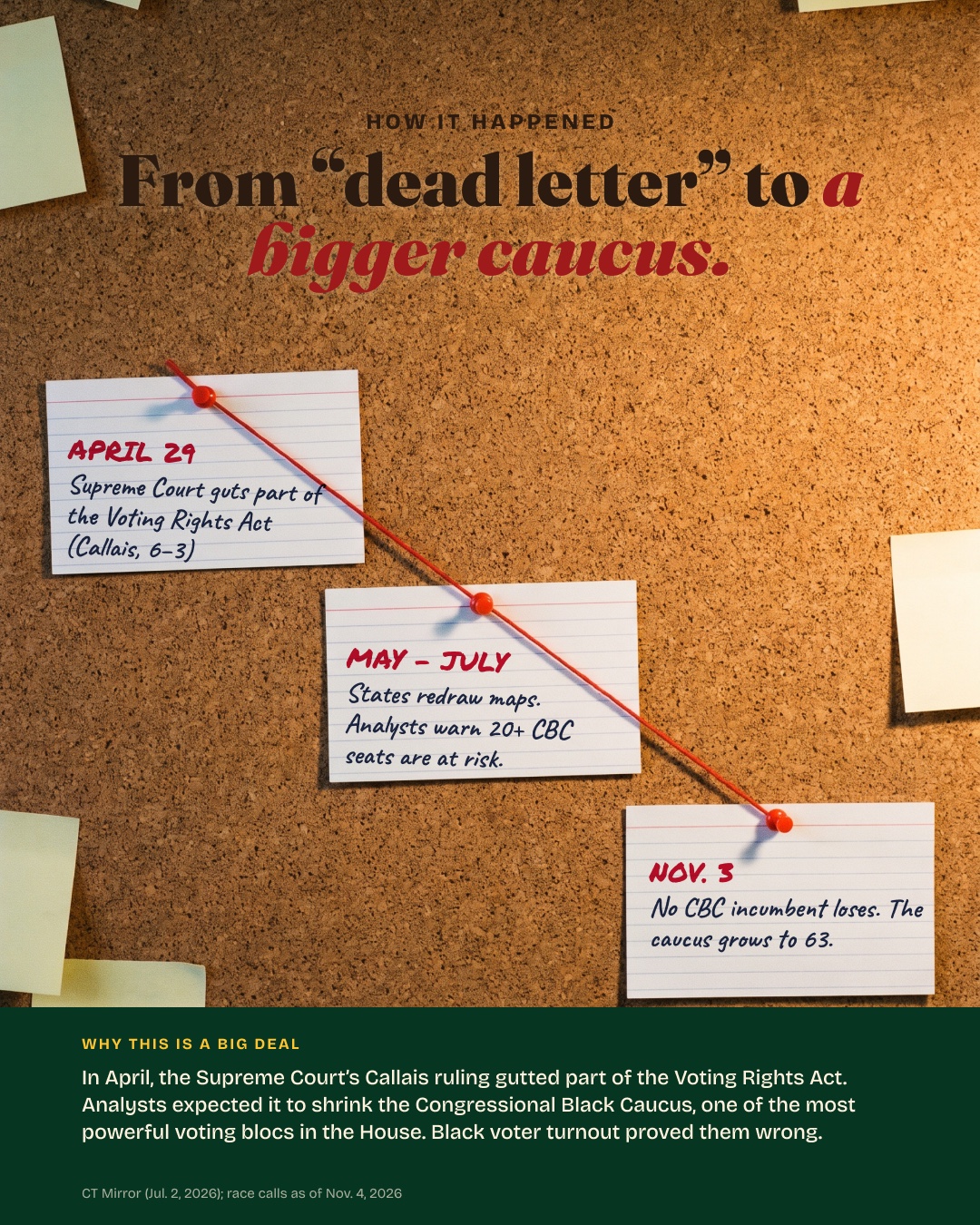
April 29: the Supreme Court guts part of the Voting Rights Act. May to July: states redraw maps, and analysts warn 20+ Congressional Black Caucus seats are at risk. Nov. 3: not one CBC incumbent loses. The caucus grows to 63.
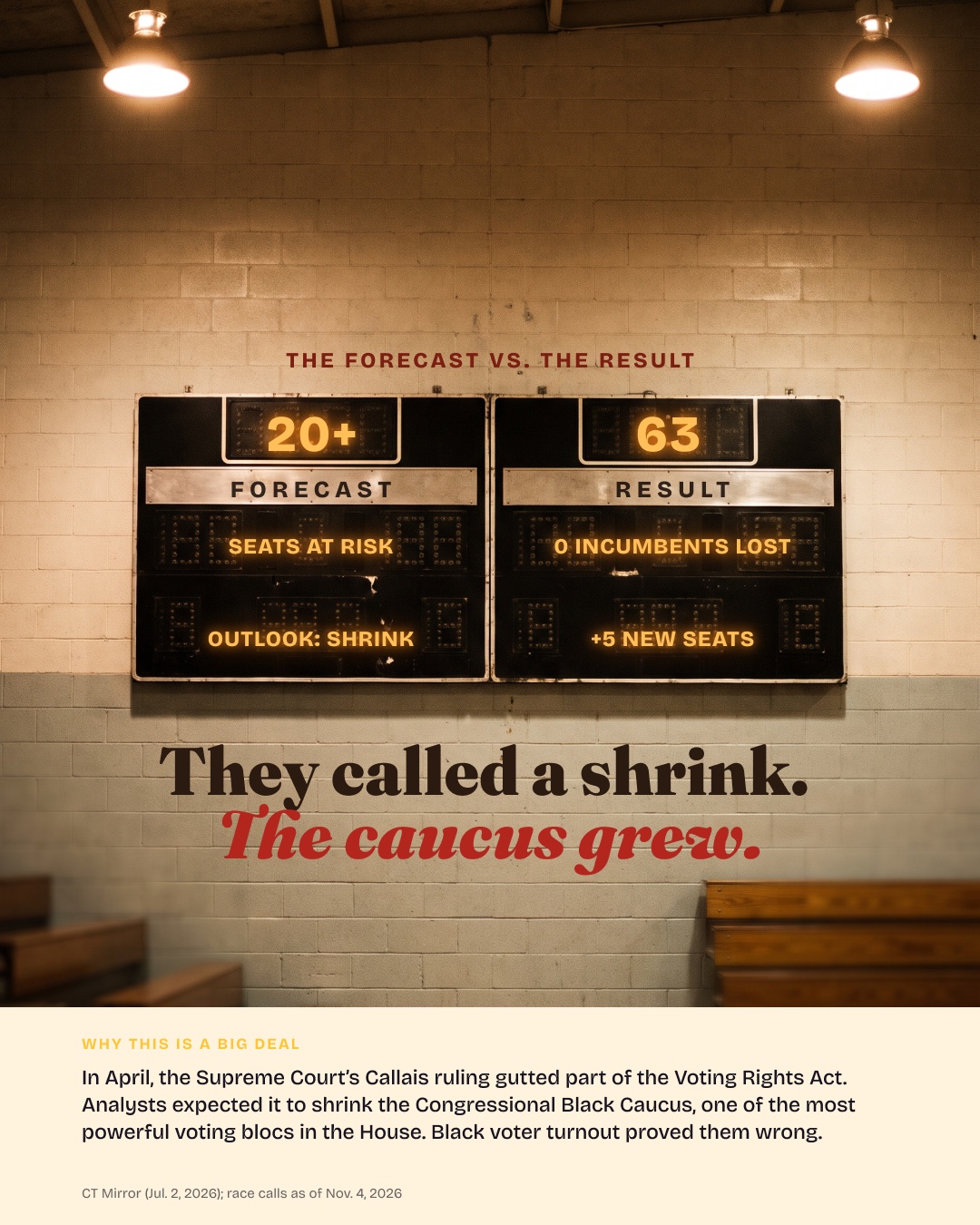
The forecast: 20+ seats at risk, outlook shrink. The result: zero incumbents lost, five new seats, a caucus of 63. They called a shrink. The caucus grew.
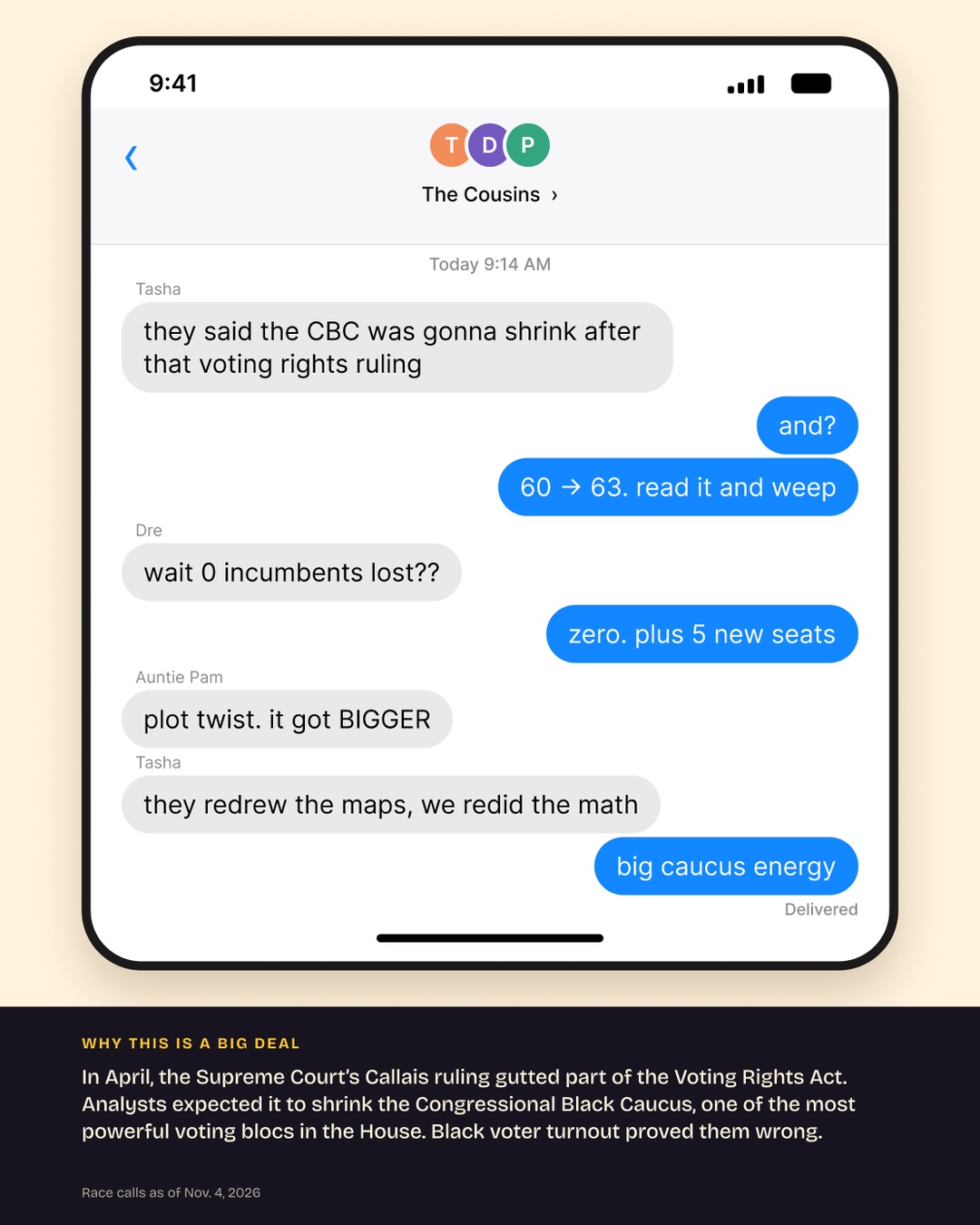
They said the CBC was gonna shrink after that voting rights ruling. And? 60 to 63. Zero incumbents lost, five new seats. They redrew the maps, we redid the math. Big caucus energy.
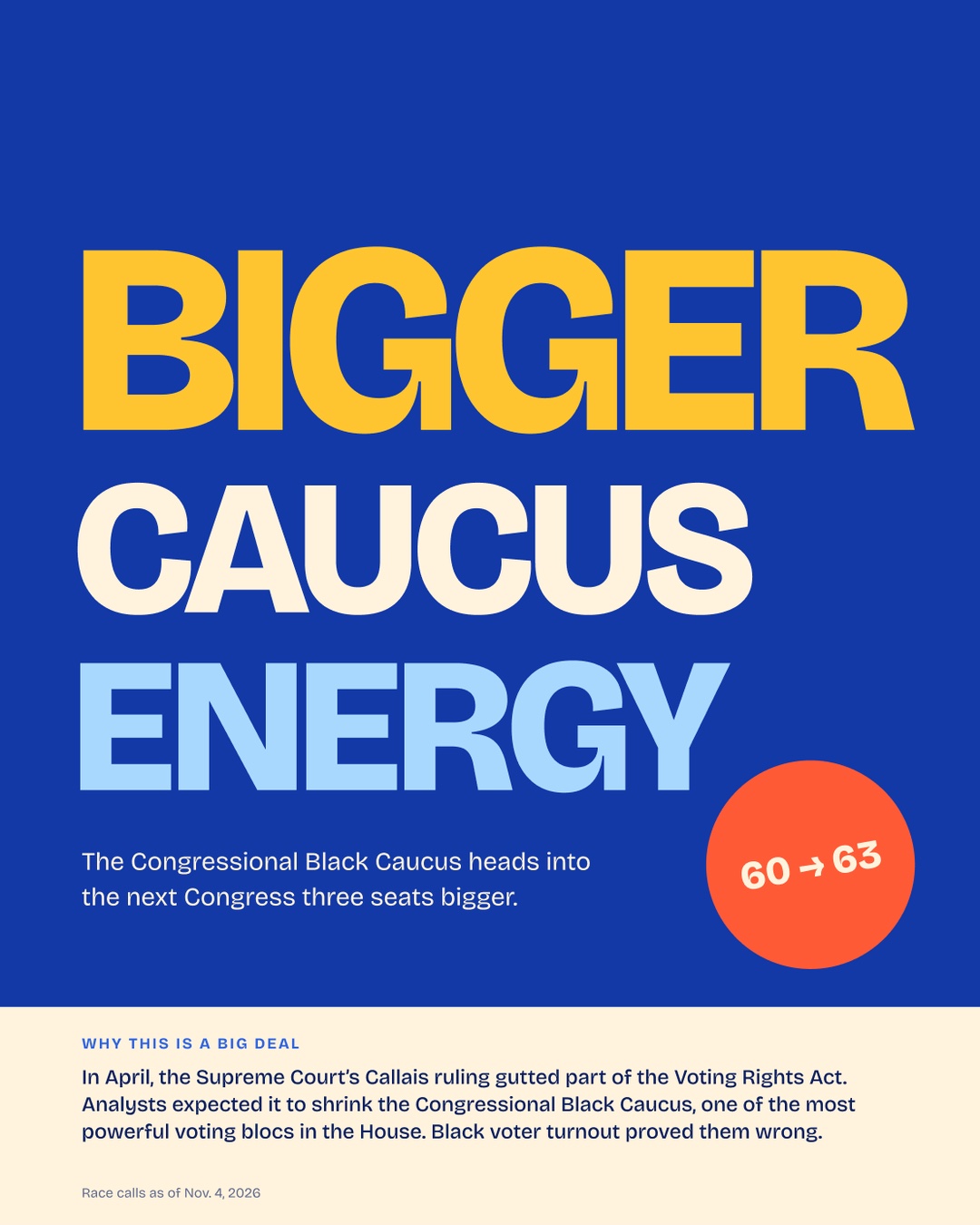
Bigger caucus energy. The Congressional Black Caucus heads into the next Congress three seats bigger: 60 to 63.
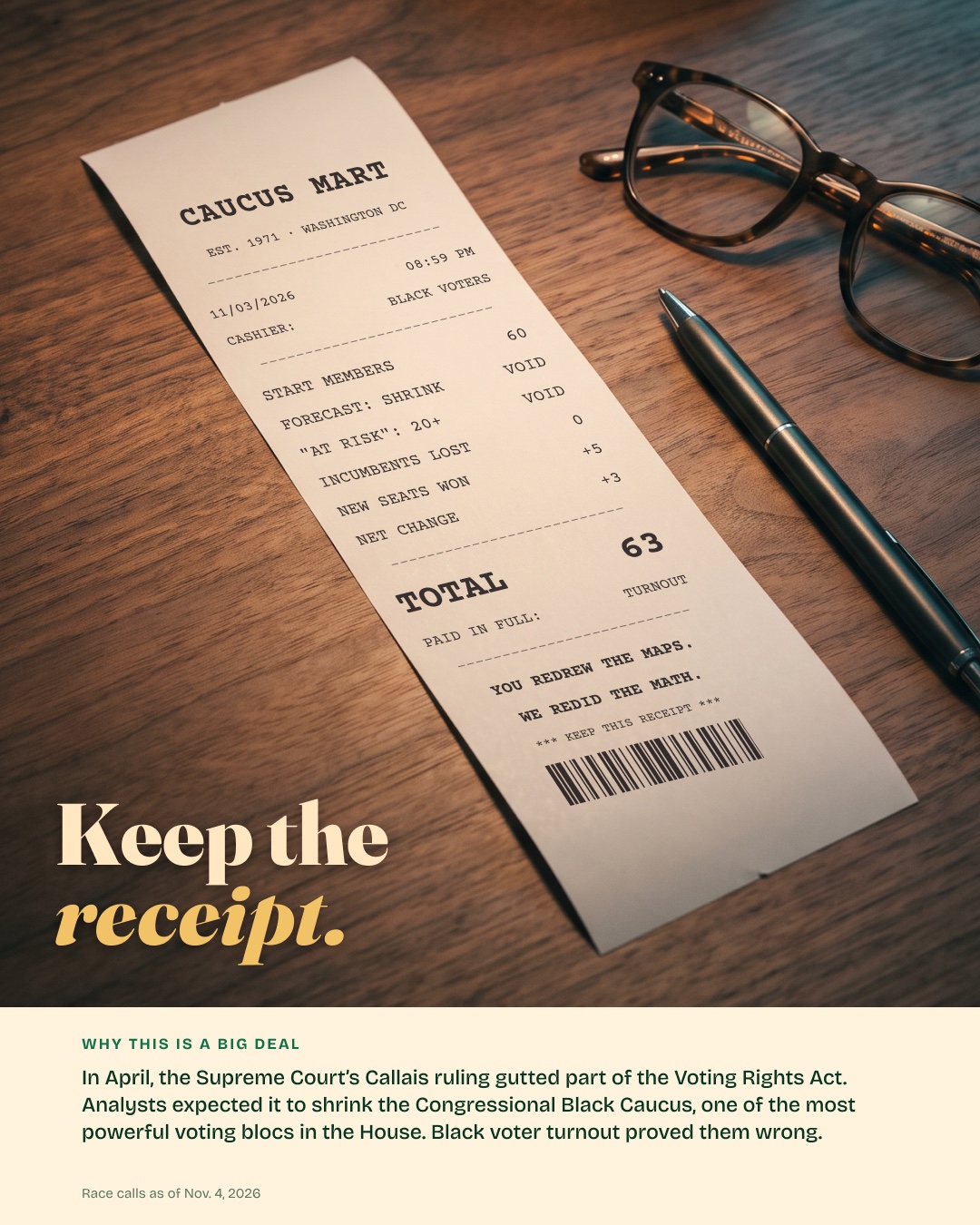
Keep the receipt. Forecast: shrink. Incumbents lost: 0. New seats won: 5. Total: 63. Paid in full by Black turnout. You redrew the maps. We redid the math.
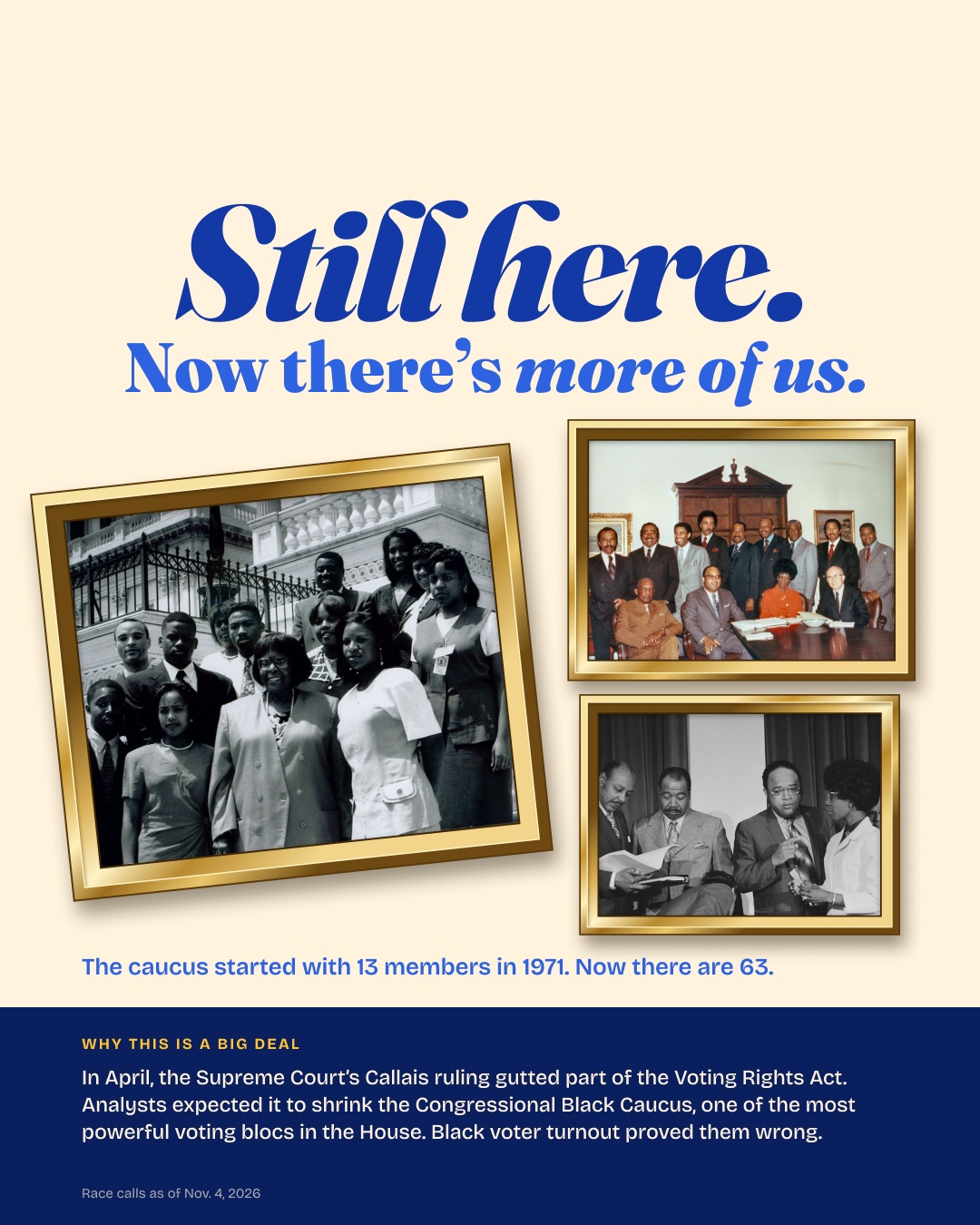
Still here. Now there’s more of us. The Congressional Black Caucus started with 13 members in 1971. Now there are 63.
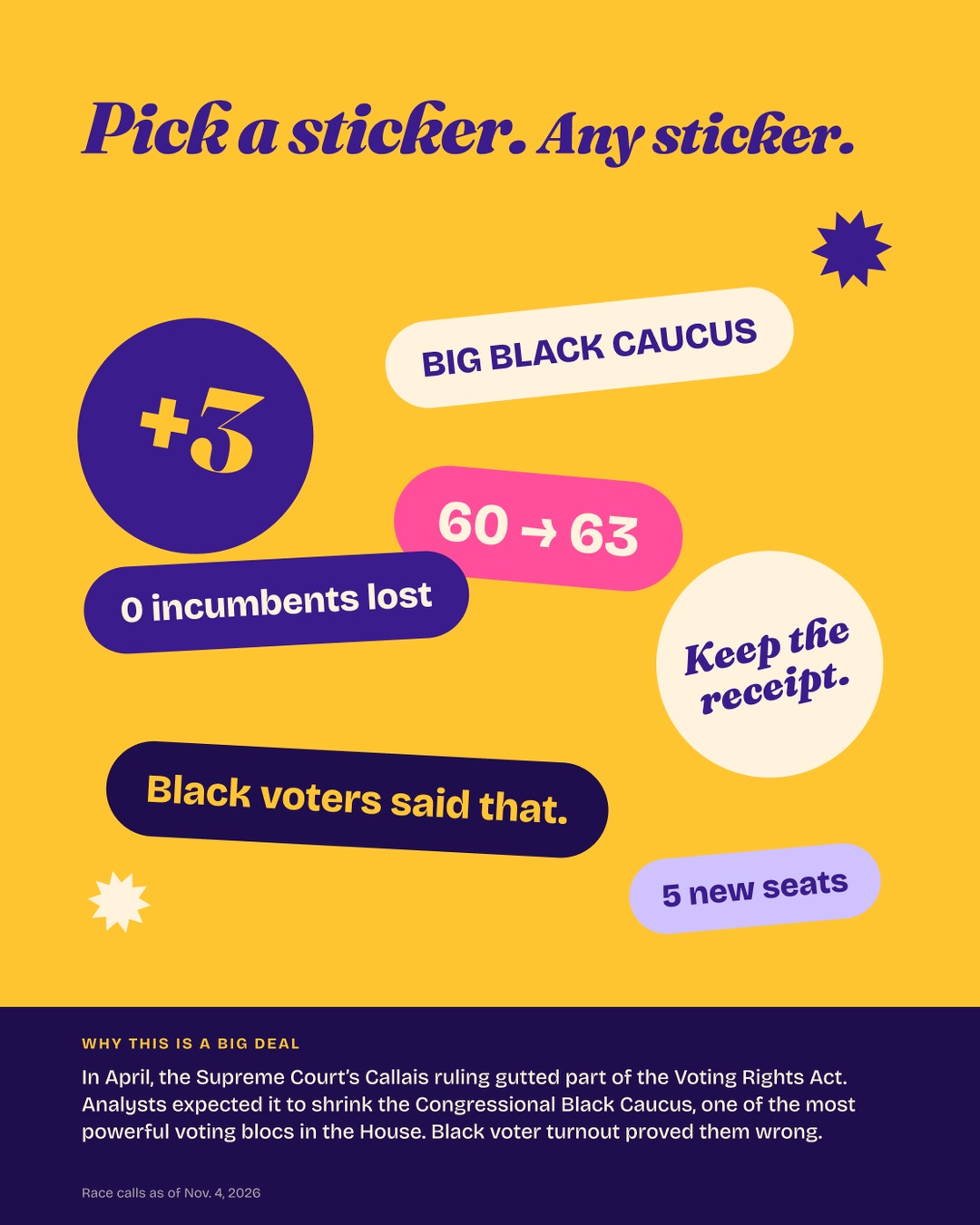
Pick a sticker. Any sticker. +3. 60 to 63. Zero incumbents lost. Five new seats. Black voters said that.
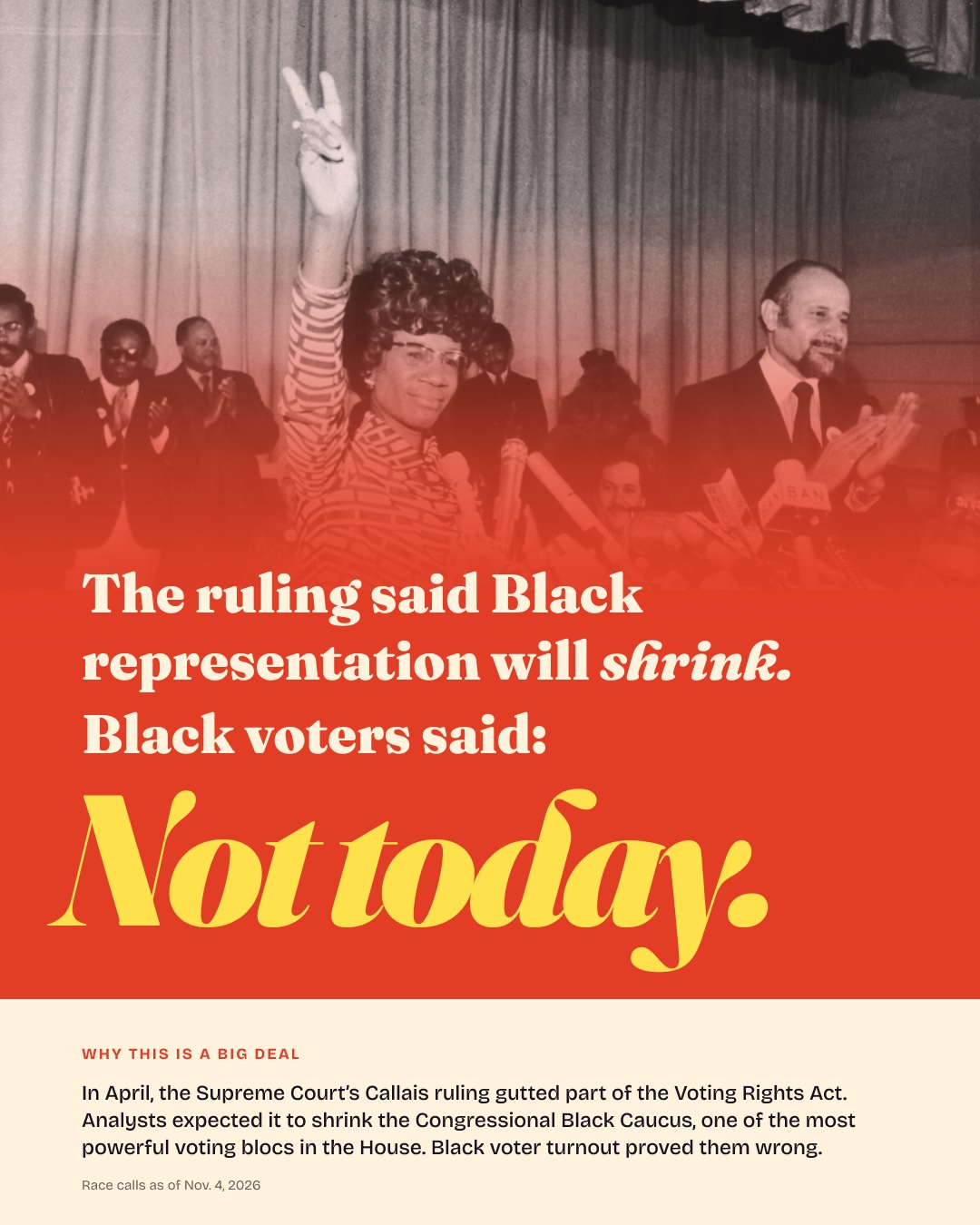
The ruling said Black representation would shrink. Black voters said: not today. The Congressional Black Caucus grew from 60 to 63.
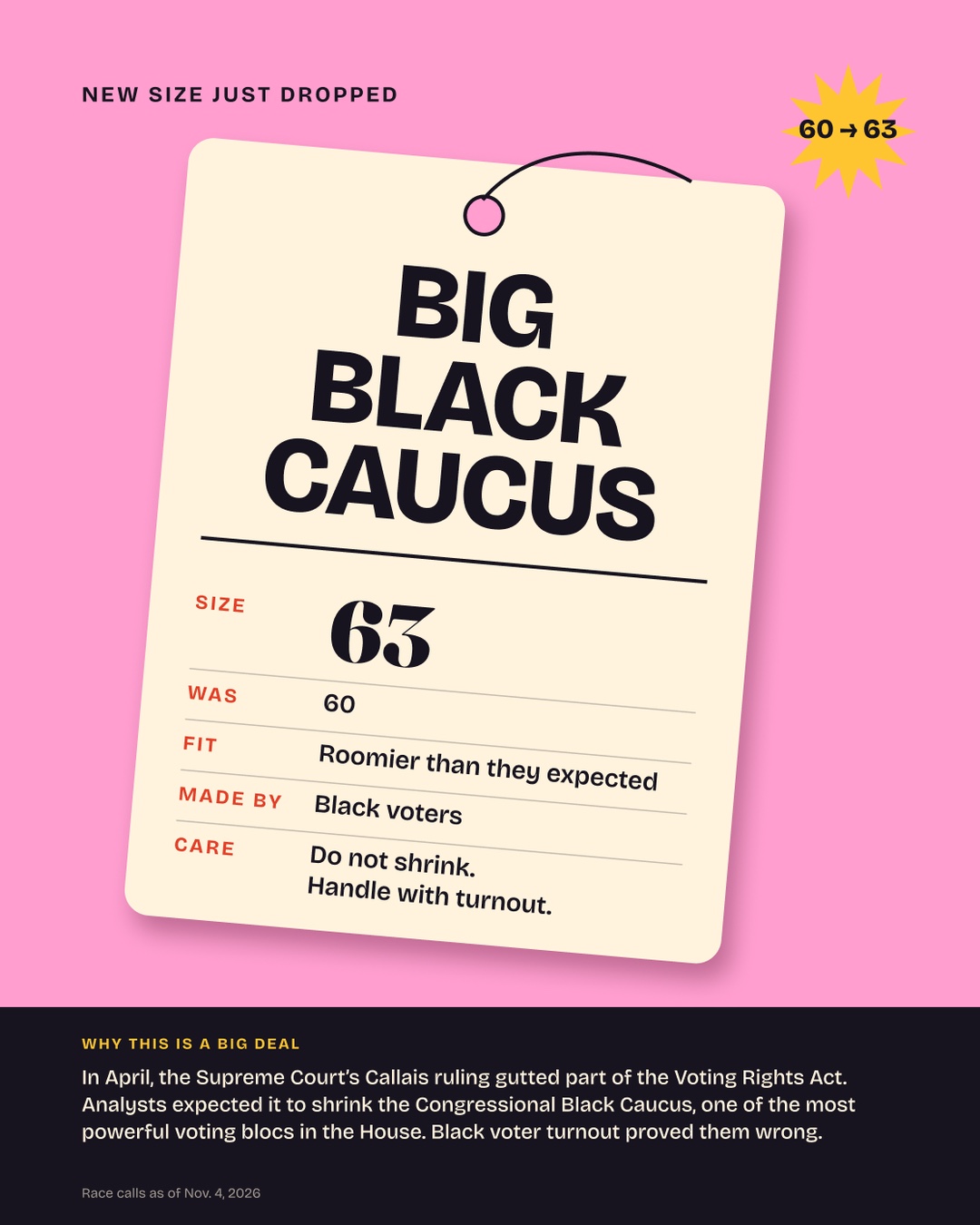
New size just dropped. Big Black Caucus. Size: 63. Was: 60. Fit: roomier than they expected. Made by Black voters. Care: do not shrink. Handle with turnout.
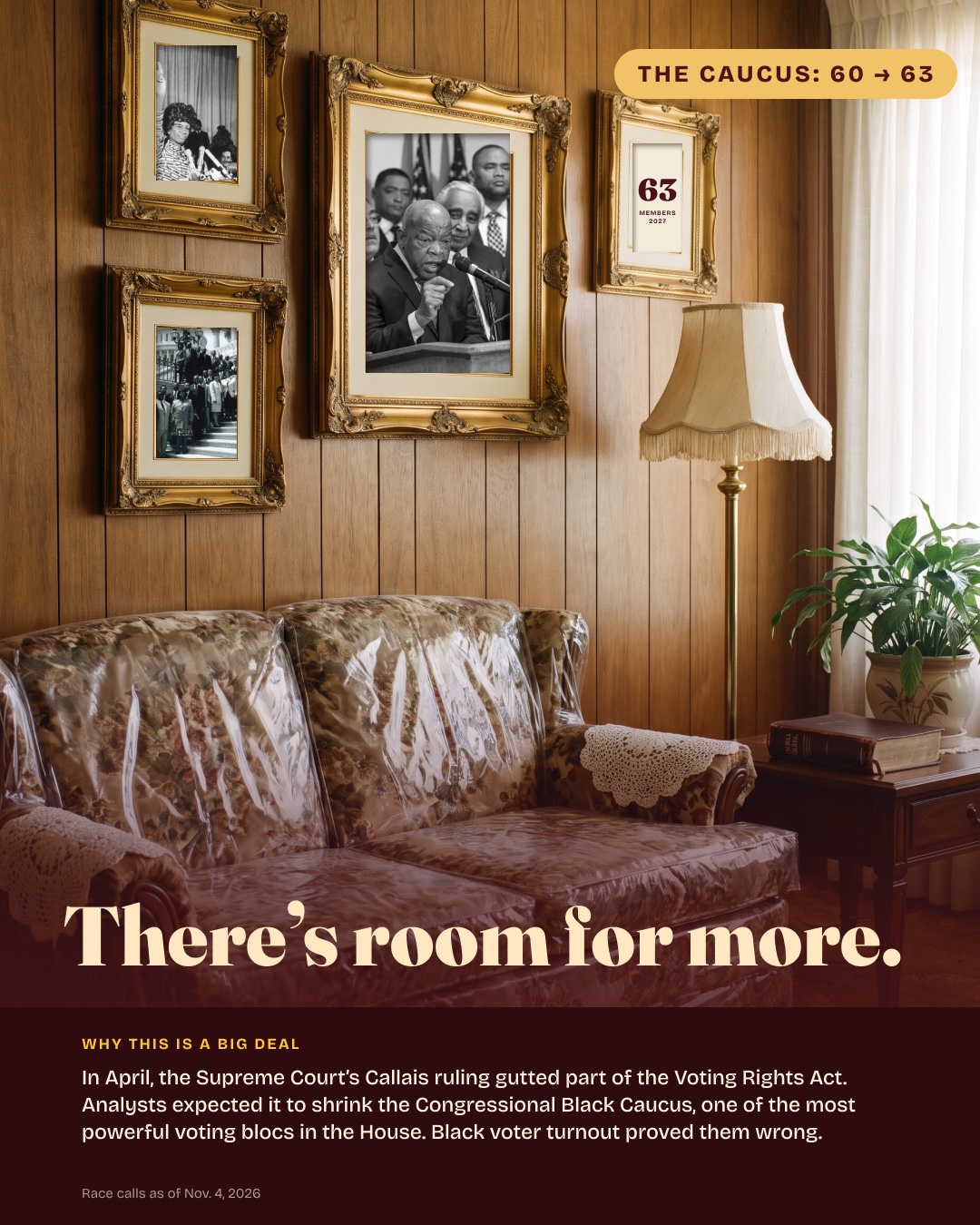
There’s room for more. The Congressional Black Caucus went from 60 to 63, and we’re not done.

Protected like Grandma’s sofa. Not one Congressional Black Caucus incumbent lost their seat.

Fan yourself. The caucus grew. The experts said Callais would shrink the Congressional Black Caucus. Black voters took it from 60 to 63.
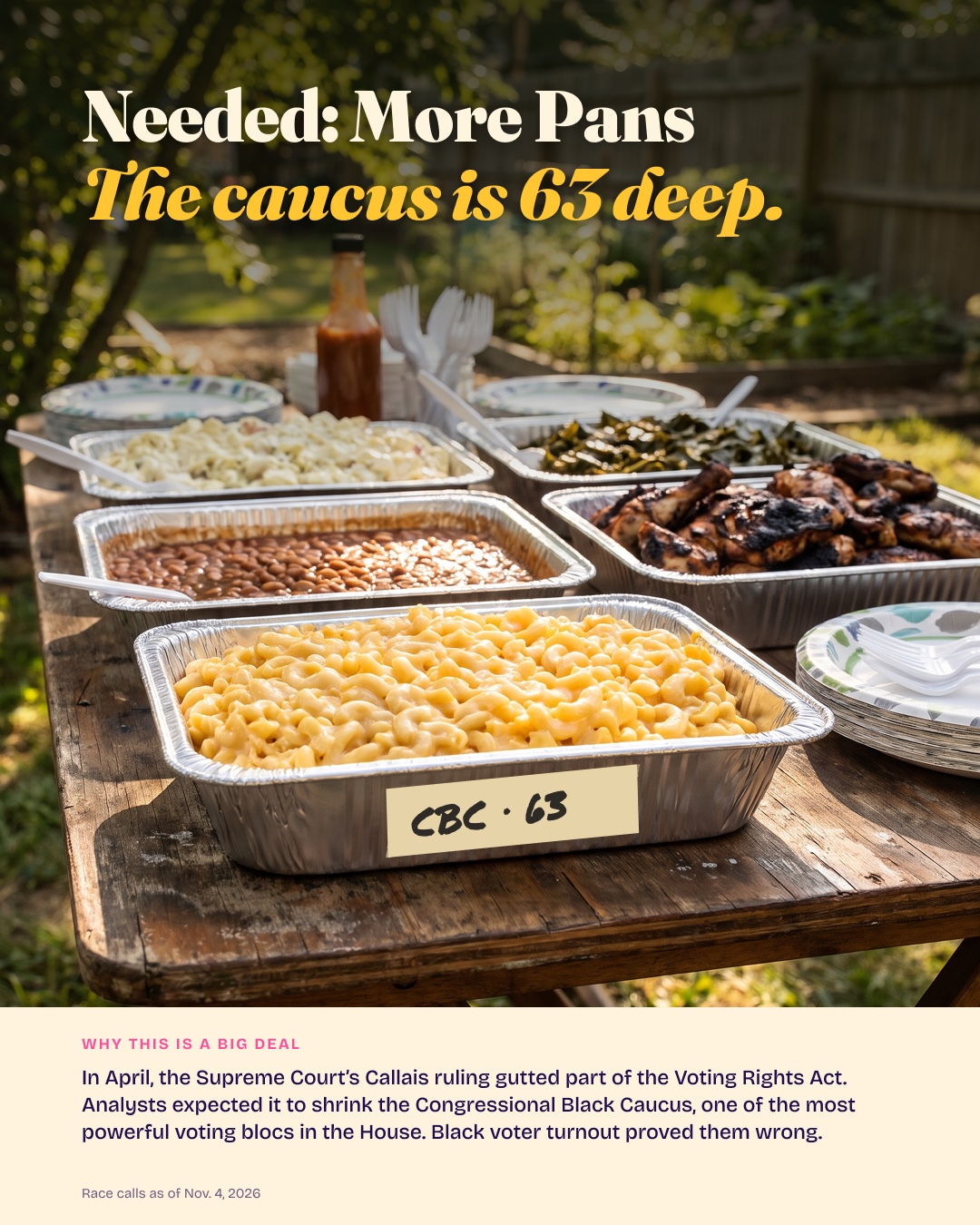
Needed: more pans. The caucus is 63 deep. They said Callais would shrink the Congressional Black Caucus. Black voters made it bigger.
Figures reflect race calls as of November 4, 2026. Sources noted on each graphic.